Death House as a Halloween One-Shot: Prep, Pacing, and Maps
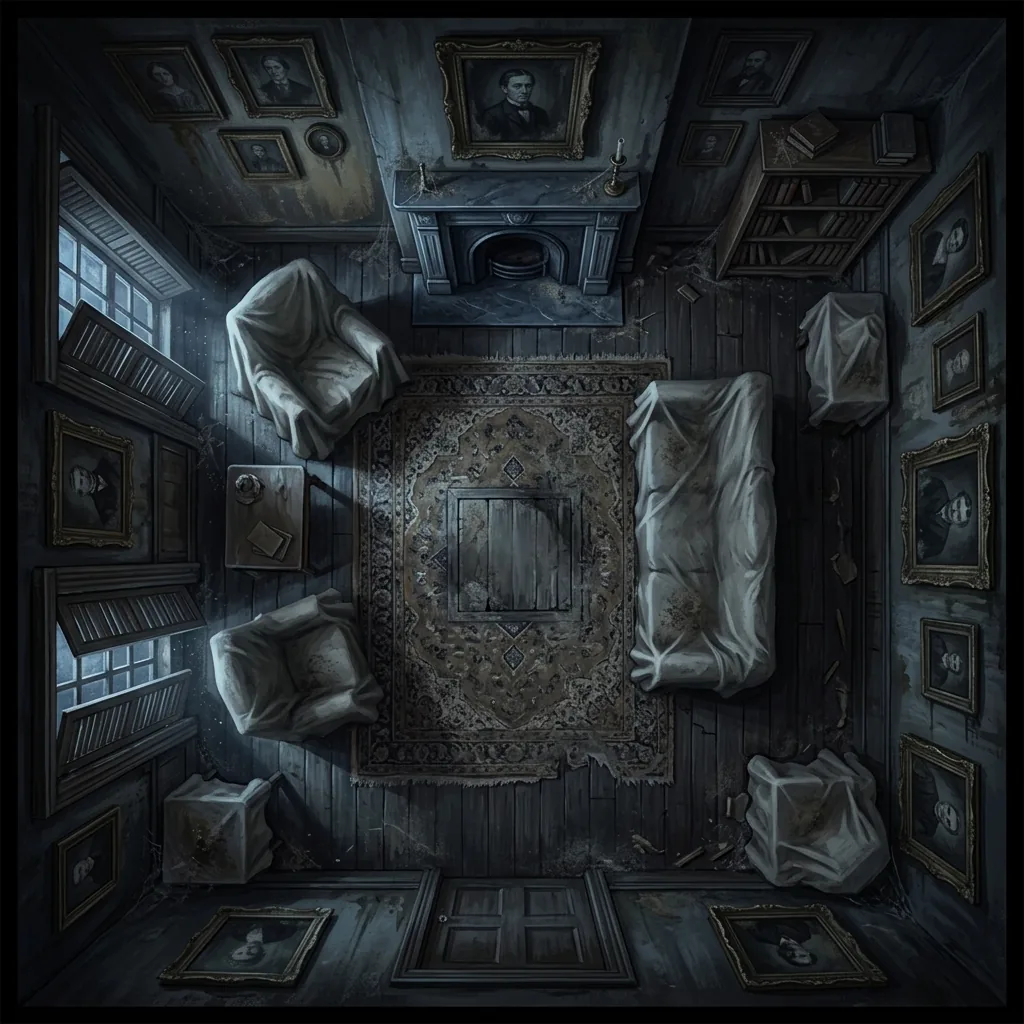
If you are planning a Death House one-shot for this Halloween, you are in good company. Wizards of the Coast's Curse of Strahd turns ten years old in 2026, and its infamous introductory adventure is still the default answer whenever a Dungeon Master asks for a scary session that fits into one long evening. Two pale children standing in the fog, a townhouse that looms a little too tall, and a basement nobody wants to talk about: the setup does half of your work before the dice ever come out. The other half, pacing the night so it lands and putting evocative maps on the table, is what this guide is for.
In this guide, we will look at why Death House became the go-to Halloween session, walk through three pacing adjustments that keep a one-shot run moving, and share original AI map prompts for every floor of a haunted Gothic townhouse. These prompts describe our own haunted house rather than the published adventure, so you can use them as a fresh alternative for players who already know the module, or as supplements when your party wanders somewhere the book does not cover.
Why Death House is the default Halloween one-shot
Plenty of horror adventures exist, so it is worth asking why this one keeps winning the October slot. The first reason is that it is genuinely self-contained. The adventure needs no campaign context, starts characters at low level, and resolves in a single long evening, which is exactly the shape of a holiday game night. Players can roll up fresh characters at six, be terrified by nine, and finish before midnight.
The second reason is the hook. Creepy children are one of the oldest tools in horror for a reason: they invert something safe into something wrong, and they give even cautious parties an excuse to walk through the front door. No bounty, no patron, no tavern rumor. Just two kids who need help.
The third reason is the one that matters most for your maps: the house itself is the villain. There is no dragon waiting on the top floor. The building is the antagonist, which means the floor plan is not just a container for encounters, it is the monster's body. Every dusty parlor and slightly wrong hallway is a chance to build dread, and the descent from grand entryway to something far older underneath gives the night a natural escalation curve. Very few adventures let the map itself do this much of the storytelling.
Pacing a one-shot run
Death House was written as the opening chapter of a long campaign, not as a one-shot, and that mismatch is where most Halloween runs go wrong. Three adjustments fix it.
Trim the exploration drag on the upper floors
The upper floors of a haunted house are full of bedrooms, closets, and storage rooms, and a thorough party will search every one of them. In a campaign, that slow burn is an asset. In a one-shot, it is a clock killer. Decide in advance which two or three rooms on each floor actually matter, and summarize the rest in a sentence or two of narration. If the players insist on tossing a linen closet, give them one atmospheric detail and move on. Your goal for the first half of the night is simple: keep the party descending.
Telegraph the basement descent
The turn of the evening is the moment the party realizes the house has an underneath, and that moment should never arrive by accident. Seed it early and often. Cold drafts rising through floorboards, a rhythmic sound below that stops when anyone mentions it, a rug that sits slightly askew over something rectangular. By the time the players find the way down, they should already be dreading it. A telegraphed descent feels inevitable; a stumbled-upon staircase just feels like more rooms.
Land the ending hard
A one-shot does not get a next session to redeem a flat finale, so spend your energy budget at the end. Whatever waits at the bottom of your house, give it a hard timer once it wakes up: chanting that grows louder, doors that seal one by one, a house that no longer wants to let anyone leave. The last twenty minutes of a great Halloween session should feel like an escape, not a victory lap. Let the players sprint back up through rooms they explored calmly two hours earlier, now changed.
Original maps for a haunted Gothic townhouse
The prompts below describe an original haunted townhouse, floor by floor, that you can generate with an AI battle map generator in a few minutes. Run them as a re-skinned Death House for veteran players, or use individual floors to supplement the official maps.
1. The parlor floor
The ground floor greets visitors with faded grandeur: a fine home that stopped breathing decades ago.
- The Setup: Sheet-covered furniture crowds a formal parlor, a cold marble fireplace anchors one wall beneath a row of stern portraits, and an ornate rug in the study sits just askew over a rectangular outline.
- The Prompt: "Top-down battle map of a grand Victorian townhouse parlor floor, entry hall with sweeping staircase, dusty sheet-covered furniture, cold marble fireplace, faded family portraits, ornate rug concealing a trapdoor outline, muted colors, dim candlelight, gridless digital art."
2. The bedroom floor and the nursery
One flight up, the house pretends a family still lives here.
- The Setup: A master bedroom with a four-poster bed sits at one end of a long wallpapered hallway; at the other end, a nursery holds a rocking cradle and toys arranged a little too neatly.
- The Prompt: "Top-down battle map of a Gothic townhouse bedroom floor, master bedroom with four-poster bed, children's nursery with rocking cradle and scattered wooden toys, long wallpapered hallway, narrow servant stairs, moonlight through tall windows, muted palette, gridless digital art."
3. The cramped attic
The top of the house is where things get put away and forgotten.
- The Setup: Sloped rafters press down on rows of storage chests and dressmaker dummies, and a single locked door waits in the far corner beneath the only window.
- The Prompt: "Top-down battle map of a cramped townhouse attic, sloped rafter walls, dusty storage chests, dressmaker dummies, cobwebs, one locked corner room, single round window casting pale light, desaturated colors, gridless digital art."
4. The basement crypt and ritual chamber
Beneath the cellar stairs, the house stops pretending.
- The Setup: Rough earthen corridors open into vaulted stonework far older than the building above, with bone-filled alcoves lining the walls and a ritual chamber at the center, its raised dais ringed by standing braziers.
- The Prompt: "Top-down battle map of a vaulted stone basement crypt, narrow earthen corridors, alcoves stacked with bones, central ritual chamber with raised dais and standing braziers, dark water seeping across flagstones, deep shadows, green torchlight, gridless digital art."
Keep the footprint, change the rooms
A haunted house one-shot benefits from a trick that is difficult with static map packs: the same floor, redecorated. Because Text to Tabletop supports area regeneration, you can select just the nursery on your bedroom-floor map and regenerate it as a decayed ruin while the hallway and master bedroom stay pixel-identical, or convert one servant quarter into something the house grew overnight. The footprint your players memorized stays the same, which is exactly what makes the changed room so unsettling. Regenerating a single area costs you seconds, not a full rebuild, so you can prepare the "before" floor and improvise the "after" mid-session.
Rounding out your Halloween prep
If Death House is the main course, it pairs well with a deeper bench of spooky material. Our roundup of Halloween battle maps covers graveyards, corn mazes, and other seasonal encounter sites for the rest of October, and our guide to Ravenloft-inspired horror battle maps digs into the wider Domains of Dread aesthetic if this one-shot turns into a full gothic campaign. For horror pacing outside the fantasy genre entirely, the design philosophy in our Call of Cthulhu map guide applies just as well to a haunted townhouse: mood over tactics, and negative space over gore.
However you run it, the tenth anniversary of Curse of Strahd is a perfect excuse to put the most famous haunted house in modern D&D back on the table. Generate your parlor floor before the party arrives, keep the basement prompt loaded for the big reveal, and let the house do the talking. To build every floor in minutes, sign up for the Text to Tabletop app today and start generating custom maps in seconds.
Tyler V
Lead Developer and UX Designer at Text to Tabletop. Passionate about helping GMs and players create better TTRPG experiences.
Ready to Forge Your Next Battle Map?
Describe the encounter and get a grid-aligned, top-down battle map in seconds, then regenerate any area until it matches your vision.
Generate Your First Map Free3 free map tokens · no credit card required