AI Dungeon Map Generator: Designing the Perfect Crawl
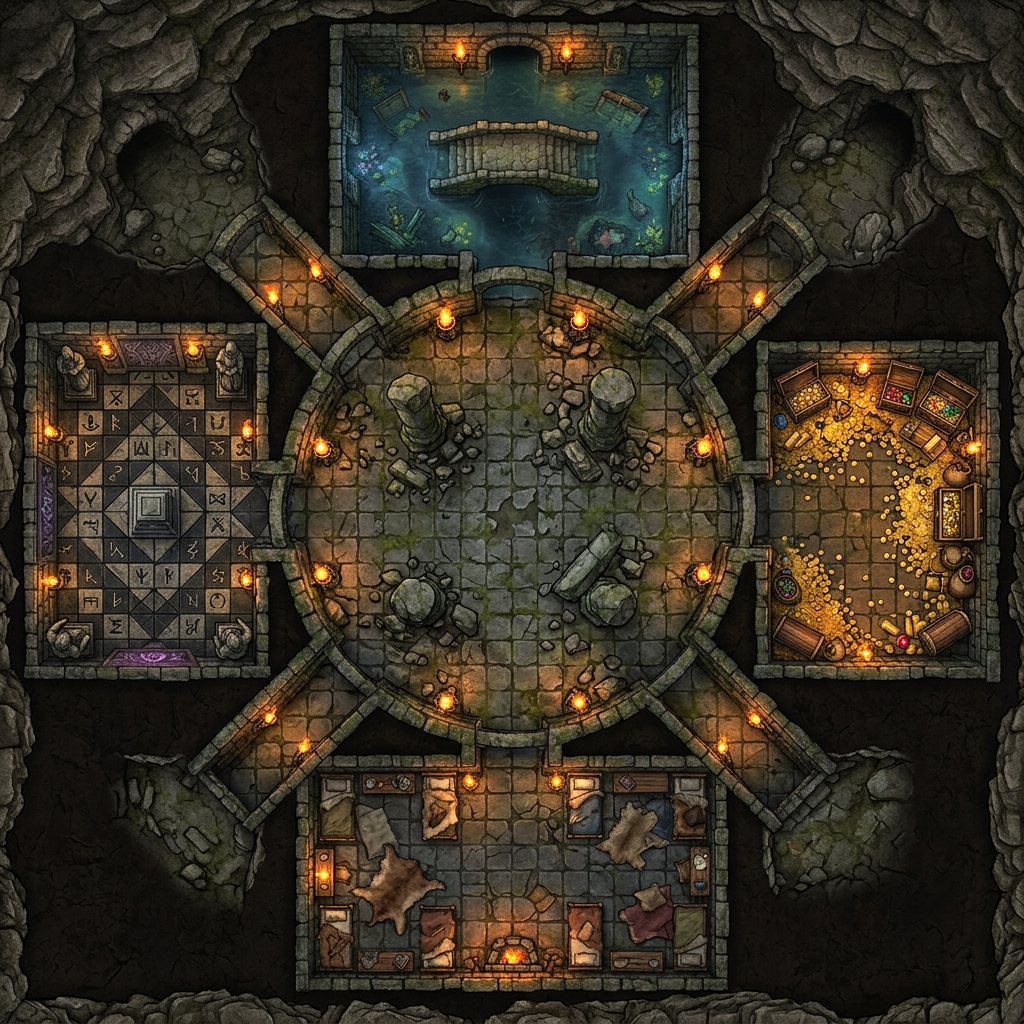
Every Game Master knows the anxiety of prep night when players explore a dark tomb. You sit before a blank grid, attempting to sketch room layouts that are both tactically interesting and narratively sound. If you want to bypass this tedious drafting, using a modern ai dungeon map generator is the ultimate solution. You can quickly generate high-quality environments and focus on the encounters that make a crawl memorable.
The classic dungeon crawl is the foundation of the tabletop RPG experience, but a repetitive grid of identical rooms can quickly ruin the sense of exploration. By leveraging digital tools, you can create immersive spaces that capture your players' imagination. With a smart approach to room design, you can transform a simple subterranean crawl into a legendary adventure.
What Makes a Good Dungeon Map?
A legendary crawl is more than a series of fights connected by hallways. A great tabletop RPG dungeon needs a sense of history, danger, and choice. When players enter a room, they should recognize its purpose, such as a grand banquet hall or a damp cell. This environmental storytelling gives context to the monsters and traps they encounter.
Pacing is the first element of a successful layout. A map packed with back-to-back combat will exhaust players. You need breathing room between fights, allowing the party to inspect the architecture or debate their route. Varying room sizes, ceiling heights, and light sources keeps the environment feeling dynamic.
Decision points are another hallmark of excellent design. Avoid linear corridors that offer only one path forward. Instead, use branching paths and loop-backs that allow players to bypass guards or discover alternate entrances. Secrets also play a massive role. Hidden doors, weak walls, and forgotten crawlspaces reward observant players and make the dungeon crawl map feel like a real, three-dimensional space.
Finally, consider individual room layouts. A good dungeon battle map should feature elevation changes, cover, and interactive hazards. Fighting goblins is much more engaging when the battlefield includes a crumbling bridge or bubbling acid. The space should actively challenge your players, forcing them to use positioning. If you need inspiration, check out our guide on 10 AI battle map ideas to get started. Naming those features precisely helps, and our reference table of dungeon map symbols and their meanings is a useful vocabulary list for both sketching and prompting.
The Five Essential Dungeon Room Types
To build a compelling crawl, your map should feature a mix of functional spaces. Each room type serves a different purpose, keeping your players on their toes. Here are the five essential room types to include, along with prompt ideas to help you generate them.
The Combat Chamber
This is the classic arena where players face off against monsters. These rooms need tactical features like pillars for cover and raised ledges for archers. Focus on structural elements that force characters to move.
Prompt Seed: "Top-down fantasy map of a ruined subterranean temple, cracked stone pillars, raised altar, dramatic torchlight, gridless."
The Puzzle Room
A puzzle room challenges your players' minds rather than their character sheets. The layout itself should contain clues or interactive components, such as giant runic floor tiles that must be stepped on in a specific order.
Prompt Seed: "Top-down dungeon battle map of a circular chamber, concentric runic floor rings, glowing blue light, ancient statues."
The Trap Corridor
A trap corridor turns movement into a hazard, forcing the party to search for hidden tripwires, pressure plates, or poison darts. These spaces should look dangerous, with scorched walls or collapsed ceilings hinting at past victims.
Prompt Seed: "Top-down battle map of a narrow dungeon corridor, stone walls with demon faces, scorch marks, dark shadows."
The Social/Parley Space
Not every inhabitant of a subterranean complex is hostile. A social space is a neutral ground where players can negotiate, trade, or gather clues. The layout should feel lived-in, with furniture, food rations, and light sources.
Prompt Seed: "Top-down map of a cozy dungeon guardroom, wooden tables, wooden bunks, iron cages, warm lantern light."
The Treasure Cache
The ultimate goal of many adventures is the loot hidden at the end of the crawl. A treasure cache should look impressive, with chest piles and magical artifacts on display. However, these rooms are rarely left unguarded: they are perfect spots for a final boss fight.
Prompt Seed: "Top-down fantasy map of an ancient vault, overflowing treasure chests, gold coins on stone floor, glowing orb."
Generating a Multi-Room Dungeon with an AI Dungeon Map Generator
When you are ready to build a full adventure, leverage a modern ai dungeon map generator to create your rooms. However, generating a cohesive dungeon crawl map requires planning. You cannot just generate random rooms: you need a consistent style and theme.
Start by establishing a clear prompt structure. To maintain visual consistency across different rooms, use the same art style terms, lighting descriptions, and color palettes in every prompt. For example, if you start with a "damp green mossy stone" aesthetic, make sure every room prompt includes those exact descriptors. This ensures that when you connect the maps in your virtual tabletop, they feel like parts of a single, unified complex. Our walkthrough of a goblin cave layout shows that approach applied end to end, from the stockade outside to the chief's hall.
Text to Tabletop makes this integration seamless. The application automatically locks the camera to a 90-degree top-down perspective, preventing conflicting angles. It also strips out grids and NPCs, giving you clean assets that align perfectly on your VTT grid. You can focus on design while the system handles formatting.
Themed Dungeons: Beyond Stone Walls
Do not limit your adventures to standard stone corridors. Tabletop RPG campaigns often take players to exotic locales, and your maps should reflect these unique environments. Here are four themed dungeon concepts to diversify your sessions.
Tomb Dungeons
Tomb dungeons focus on ancient history, embalming chambers, and sarcophagi. The atmosphere should feel dusty and sacred, with gold accents contrasting against dark stone.
Prompt Seed: "Top-down fantasy map of an Egyptian-style tomb chamber, central sarcophagus, hieroglyphics on stone walls, sand dunes."
Ice Dungeons
Frozen caverns and glacial fortresses present unique environmental hazards like slippery floors. The color palette should feature bright blues and whites, with icy walls reflecting faint light.
Prompt Seed: "Top-down battle map of an ice cave chamber, blue glacial walls, frozen stalagmites, reflective ice floor."
Organic Flesh Dungeons
For a horror-themed campaign, a dungeon inside a massive living beast creates an unsettling atmosphere. Walls are made of pulsing muscle, while pools of acid act as digestive hazards.
Prompt Seed: "Top-down dark fantasy map of a flesh dungeon room, pulsing red organic walls, pools of yellow acid."
Mechanical Clockwork Dungeons
A clockwork dungeon is a shifting maze of gears, brass pipes, and steam vents. The layout can change mid-session, forcing players to adapt as paths open.
Prompt Seed: "Top-down steampunk map of a clockwork dungeon room, brass floor plates, spinning copper gears, steam pipes."
Craving more dark-fantasy layouts? Our Shadowdark map inspiration guide collects twelve grimdark dungeon prompts ready to drop into your campaign.
Pacing the Crawl Through Map Design
Pacing is the secret ingredient that keeps players engaged during a long session. The design of your dungeon battle map dictates how the party expends their resources and when they can catch their breath. If every room contains a deadly threat, players will become overly cautious, slowing the game down to a crawl as they check every flagstone for traps.
To maintain momentum, structure your map with a clear rhythm of rest rooms and danger rooms. Rest rooms are safe havens (such as an abandoned shrine or a hidden cave behind a waterfall) where the party can take a short rest, treat wounds, and identify magic items. In contrast, danger rooms are high-risk zones designed to deplete resources. By using an ai dungeon map generator, you can customize the visual style of these spaces to signal transitions. A bright, clean room suggests safety, while a dark chamber filled with bones indicates impending danger. Using these visual cues keeps the players engaged without you needing to say a word.
Ready to build your next tabletop RPG dungeon? Start designing your layout with our AI dungeon map generator to create high-quality environments in seconds, and try the Text to Tabletop app today to bring your campaigns to life.
Tyler V
Lead Developer and UX Designer at Text to Tabletop. Passionate about helping GMs and players create better TTRPG experiences.
Ready to Forge Your Next Battle Map?
Describe the encounter and get a grid-aligned, top-down battle map in seconds, then regenerate any area until it matches your vision.
Generate Your First Map Free3 free map tokens · no credit card required