City Battle Map Tactics: Heists, Riots, and Chase Scenes
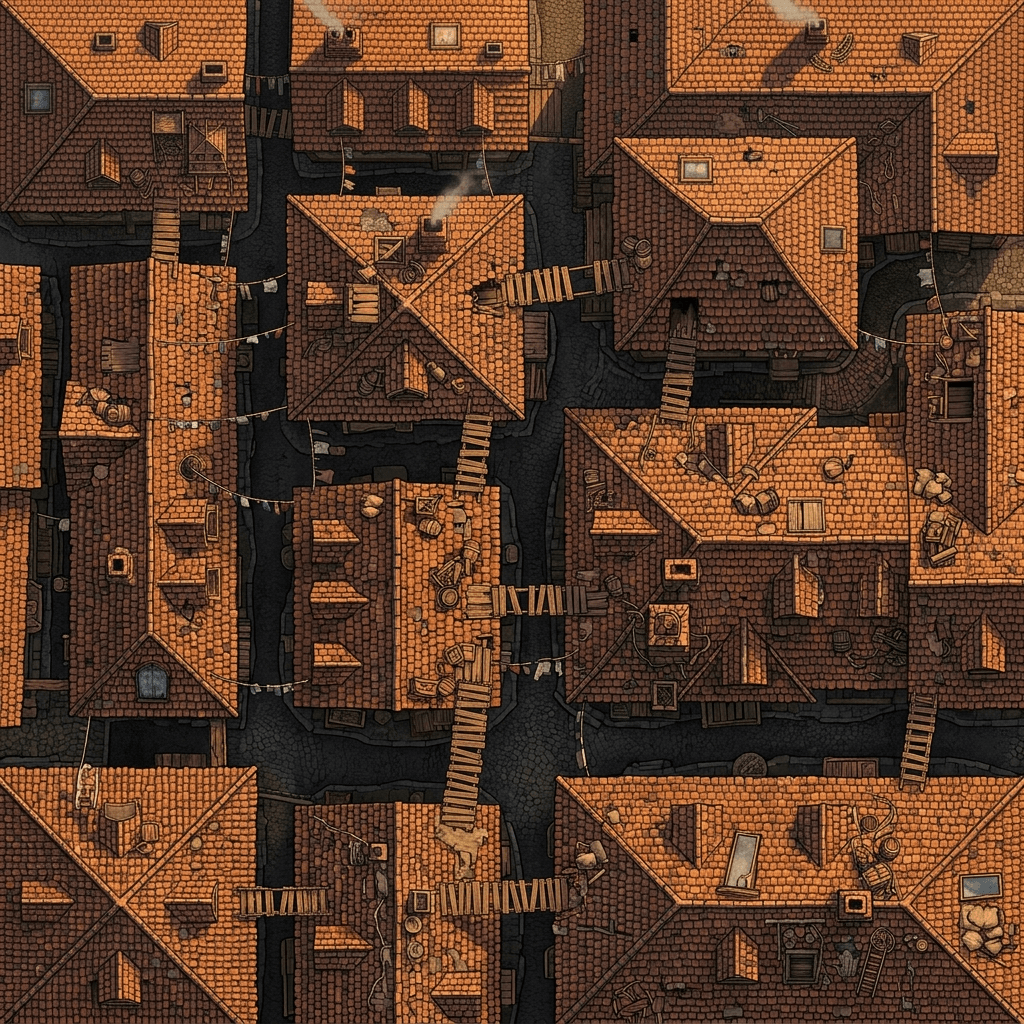
While traditional dungeon crawls dominate tabletop RPG adventures, some of the most memorable campaign moments happen within the crowded streets of a fantasy metropolis. Urban environments offer a completely different set of challenges and opportunities for both players and Game Masters. However, designing a combat-scale city battle map that captures the complexity of a bustling town square or a maze-like sewer network is notoriously difficult. GMs often spend hours placing individual cobblestones, crates, and doorways in traditional editing software. Fortunately, modern design tools allow you to bypass this tedious process. By utilizing the Text to Tabletop app, you can build immersive settings that support dynamic tactical play instantly.
In this guide, we will explore why urban encounters are uniquely challenging to design. We will also present five urban encounter archetypes, complete with ready-to-use generator prompts, to help you create your next street battle map in seconds.
Why Urban Encounters Demand a Detailed City Battle Map
If you run a game in a city, you cannot rely on flat, empty grids. Urban combat is naturally chaotic, and player characters will constantly look for ways to exploit their surroundings. A detailed city battle map must support several structural requirements.
First, urban spaces feature distinct vertical layers. Characters will scale wooden ladders, climb onto balconies, and run across tiled roofs. A simple flat room strips away these tactical options. Your map must clearly indicate elevation changes so players can plan their movements vertically. GMs can use balconies to give ranged combatants cover and height advantage, while thieves use rooftops to escape from the local city watch.
Second, civilian density and street clutter create a highly complex tactical environment. Unlike clean dungeon corridors, city streets are filled with market stalls, wooden carts, barrels, and lampposts. This clutter acts as natural cover and difficult terrain, forcing players to choose their paths carefully. An overturned cart might block a narrow alleyway, forcing a character to make an Athletics check to climb over it or find a longer detour.
Third, urban battlegrounds offer multiple escape routes and entry points. A combat scene in a city alleyway is rarely isolated. Guards can arrive from a side street, or a thief can slip through a window. The map layout must show these intersecting paths to keep the encounter feeling alive. This open layout forces players to think about security and flanking, as enemies can easily surprise them from unsecured side streets.
Finally, you must manage mixed terrain types. A single street battle map might feature cobblestones, muddy puddles, wooden scaffolding, and stone steps. Each surface presents different tactical implications for movement and positioning, making a detailed layout essential. For example, wet cobblestones might reduce movement speeds, while scaffolding provides a temporary path to the rooftops.
Five Urban Encounter Archetypes
To help you design memorable encounters, here are five combat-scale urban archetypes. Each setup includes a ready-to-use prompt designed to generate a highly tactical environment using a modern ai battle map generator tool.
1. The Rooftop Chase
Rooftops are perfect for high-stakes, movement-focused encounters. GMs can use them to run dramatic chase scenes where characters jump across building gaps and dodge chimneys.
- The Setup: The party must catch an assassin fleeing across the city rooftops. The terrain is highly vertical, with wooden planks bridging narrow building gaps, requiring Acrobatics checks to cross. Chimneys and dovecotes provide cover from ranged attacks.
- The Prompt: "Top-down urban battle map of connected medieval tiled rooftops at varying heights, wooden planks bridging building gaps, stone chimneys, laundry lines, warm late-afternoon golden lighting, 90-degree overhead view."
2. The Heist Approach
A heist encounter is about infiltration and stealth. The map must feature multiple entry points and structural obstacles that block lines of sight.
- The Setup: The characters must break into a secure noble manor house. The map shows the exterior cobblestone street, a walled courtyard guarded by patrols, and several ground-floor windows that serve as potential entry points.
- The Prompt: "Top-down battle map of a cobblestone street outside a stone noble manor, iron gate, paved courtyard, wooden carriages, barrels, street lamps casting warm light, gridless digital art."
3. The Riot in the Square
A crowded plaza is a chaotic tactical environment. GMs can use broken market stalls and fire hazards to create an unpredictable combat arena.
- The Setup: A public protest turns violent in the city center. The characters are caught in the middle of a burning market square filled with debris, broken stalls, and scattered supplies that act as difficult terrain and block paths.
- The Prompt: "Top-down battle map of a medieval city square, broken wooden merchant stalls, scattered crates, patches of fire and smoke, central stone fountain, cobblestone paving, overhead perspective."
4. The Sewer Pursuit
Sewers provide classic, claustrophobic dungeoneering with an urban twist. Running water and branching tunnels force players to manage movement penalties.
- The Setup: The party tracks a guild of smugglers through the city's underbelly. A central channel of murky water divides the stone walkway, creating a hazardous barrier that requires jumps or swimming to cross.
- The Prompt: "Top-down Underdark sewer battle map, central flowing channel of green water, stone walkways on both sides, rusty iron grates, moss-covered brick walls, dim green crystal lighting."
The tunnels under a city deserve more than one map, and our dedicated guide to sewer battle maps covers junction geometry, sluice gates, and rising water in full.
5. The City Watch Standoff
A standoff in a public plaza forces players to balance tactical positioning with the presence of civilian witnesses.
- The Setup: The city watch corners the party in a public plaza. The characters must use a central monument, marble pillars, and manicured hedges for cover while avoiding civilian casualties in the open plaza.
- The Prompt: "Top-down battle map of a marble paved plaza, central stone statue monument, surrounding columns, stone benches, manicured hedges, bright midday sunlight, shadows cast by pillars, gridless fantasy art."
When the fighting reaches the walls rather than the streets, our guide to castle siege battle maps breaks an assault into four stages with a map for each.
Generating Layered Urban Maps with AI
When generating your urban layouts, it is important to prompt for visible vertical features even when creating a flat 2D map. Mentioning elements like balconies, raised wooden walkways, rooflines, and sunken alleys forces the generator to build distinct elevation indicators into the texture.
This approach ensures that your players can easily distinguish between high and low ground during play. If your campaign requires transitioning from outdoor streets to indoor spaces, check out our guide on generating ai tavern map generator ideas to design detailed interiors that connect seamlessly to your city streets.
For a broader selection of environments, read our list of fantasy battle maps to inspire your next urban campaign location.
From Map to Pursuit Mechanics
An excellent urban battle map should act as a pacing device. During a chase scene, you can use the map's layout to track the distance between the characters and their target. Rather than resolving the chase with simple dice checks, force players to navigate the actual obstacles shown on the map.
For example, a character might spend their movement action to climb a stack of crates or jump across a street gap. GMs can implement chase rules where characters face unique complications based on their location on the map, such as dodging a falling roof tile or navigating a crowded alleyway. This turns the physical environment into an active participant in the encounter, making movement decisions critical.
To build these detailed environments instantly, use the Text to Tabletop app. The tool automatically enforces a flat top-down lock and strips out pre-baked grids, allowing you to generate a usable city battle map in seconds on any device. Sign up today and design your next urban battleground!
Tyler V
Lead Developer and UX Designer at Text to Tabletop. Passionate about helping GMs and players create better TTRPG experiences.
Ready to Forge Your Next Battle Map?
Describe the encounter and get a grid-aligned, top-down battle map in seconds, then regenerate any area until it matches your vision.
Generate Your First Map Free3 free map tokens · no credit card required