Pathfinder 2e Battle Maps with AI: A Game Master's Guide
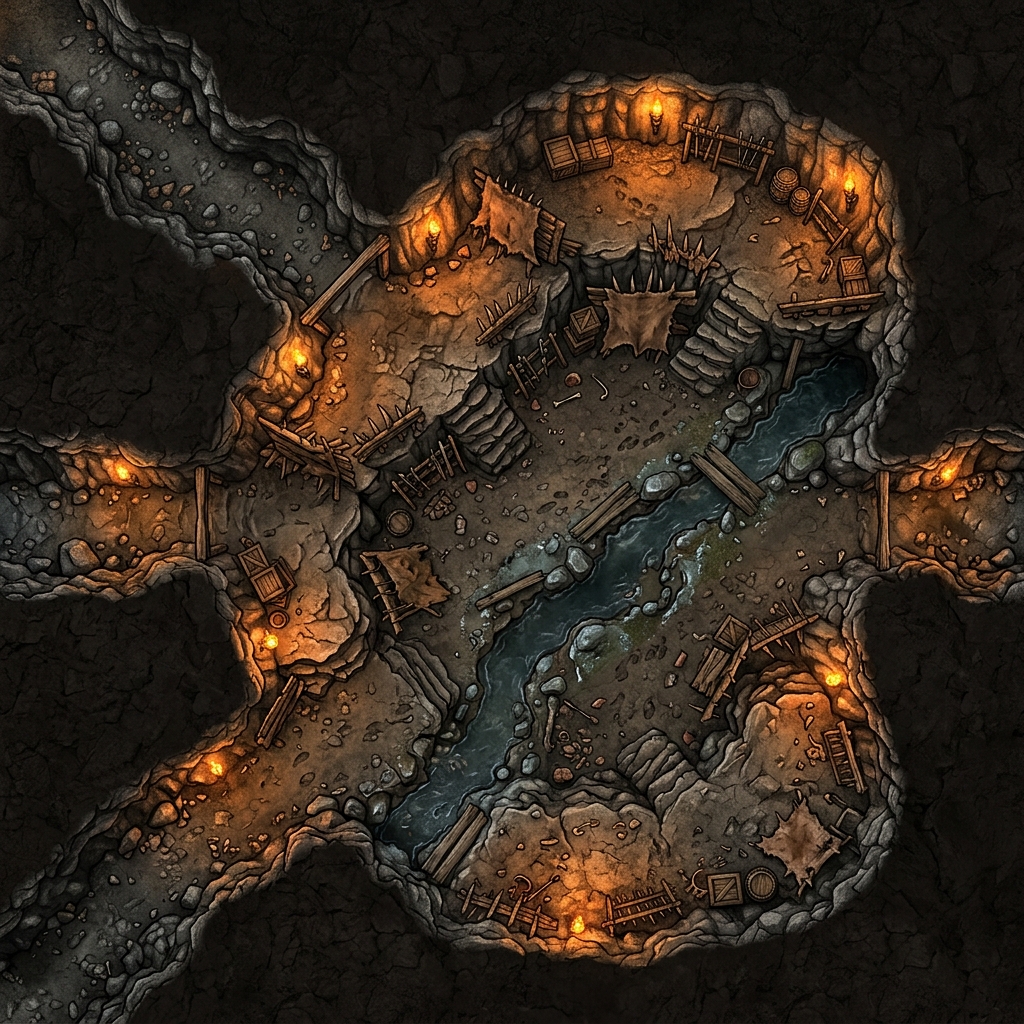
Preparing for a session in Paizo's Lost Omens setting is an exciting process, but designing a tactical Pathfinder 2e battle map that supports complex combat can quickly turn session prep into an exhausting chore. Unlike other tabletop RPG systems, Pathfinder second edition relies heavily on tactical positioning, where every square foot of terrain can decide the difference between victory and defeat. If you are tired of spending hours drawing cliffs and ruins in manual editors, using a modern pathfinder map generator is the ultimate way to prep. With the right AI tools, you can forge detailed environments that challenge your party's tactical planning.
Why Pathfinder 2e Demands Better Battle Maps
When you run a Pathfinder 2e game, you are dealing with a highly tactical combat system. Battles in Paizo's flagship RPG are rarely static slugfests where martial characters stand in place and swing their weapons. Instead, combat relies heavily on movement, positioning, and exploiting the environment. Empty, flat rooms strip away the mechanical depth that makes the game fun.
The three-action economy drives this complexity. Without a rigid movement loop, characters can Stride, Step, Recall Knowledge, or use specialized feats every turn. A well-designed environment encourages players to use these actions creatively. A rogue might seek cover behind a pillar, while a fighter Shoves a foe off a ledge.
Reaction-heavy combat makes movement risky. Many foes possess Reactive Strike, making the Step action (moving five feet without triggering reactions) incredibly valuable. However, you cannot Step into difficult terrain. When your maps feature rubble, thick brush, or mud, you create immediate tactical dilemmas. Hazardous terrain forces players to choose: Stride and risk a reaction, or take a slower, safer route.
Several class feats and skill actions interact directly with the environment:
- Woodland Stride: Rangers and druids move through difficult terrain without penalty.
- Steady Balance: Acrobatics lets characters cross narrow ledges at full speed, bypassing choke points.
- Climb and Swim: Athletics lets characters scale cliffs or swim rivers, adding verticality.
- Hide and Sneak: Stealth requires physical cover like trees or walls.
To easily create these environments, a dedicated ai battle map generator is invaluable. Rather than placing every rock and tree manually in traditional editors, AI lets you describe the layout and generate it in seconds, shifting your focus to encounter design.
Designing for Tactical Depth on a Pathfinder 2e Battle Map
A rich tactical arena must break up sightlines and vary terrain. When you generate a pf2e battle map, focus on four factors: elevation, difficult terrain, cover, and choke points.
Elevation changes add verticality. Raised platforms, balconies, or steep hillsides force players to think about vertical space. Since climbing requires action-consuming Athletics checks, players must decide if they want to climb for a better vantage point or hold the low ground.
Difficult terrain is another crucial tool. Entering a square of difficult terrain costs five extra feet of movement and prevents Step actions. Rubble or briars can shut down safe repositioning, forcing melee fighters to take slow flanks or run through the open center where they are vulnerable. Greater difficult terrain costs ten extra feet, representing deep mud or heavy snow.
Cover is fundamental to defensive math in this edition, offering three tiers: Lesser Cover (+1 AC) from minor obstacles like tree trunks; Standard Cover (+2 AC, Reflex saves, and Stealth) from substantial barriers; and Greater Cover (+4 AC) from near-complete protection like an arrow slit. Scattering cover encourages ranged combatants to seek defensive positions.
Finally, choke points like narrow doors or rope bridges limit combatants and prevent flanking, which is crucial since flanking grants a flat -2 circumstance penalty to AC. Defensive characters can block these paths to protect vulnerable spellcasters.
Five Pathfinder 2e Encounter Map Prompts
To help you get started, here are five ready-to-use prompts designed to generate highly tactical environments. These prompts are tailored to work beautifully with our ai battle map generator, ensuring you get the perfect layout for your next session.
1. Goblin Warren Ambush
A band of goblin commandos has set an ambush in the narrow, muddy tunnels of the Isger wilderness. Medium characters must squeeze through low tunnels, while small goblins run at full speed through secret side-passages.
The Prompt: "Top-down battle map of a muddy goblin warren cave, narrow tunnels, low rocky ceilings, pools of dirty water, crude wooden barricades, lit by flickering torches, gridless, digital art."
2. Aiudara Ruins
Deep in Kyonin, a long-abandoned aiudara (elven gateway) sits on a stone dais. Crumbling pillars provide standard cover, while overgrown briars create difficult terrain.
The Prompt: "Top-down fantasy map of ancient elven ruins, a central stone circular portal platform, crumbling white pillars, overgrown green vines and briars, soft forest sunlight filtering through leaves, 90-degree overhead view."
3. Arcaneum Laboratory Accident
An experiment in a wizard's laboratory has gone wrong, leaving pools of glowing, volatile liquid across the stone floor. This liquid acts as hazardous terrain, dealing acid or force damage.
The Prompt: "Top-down fantasy battle map of a wizard library and laboratory, broken desks, glowing arcane circles, pools of glowing green slime, stone pillars, parchment scrolls scattered, overhead perspective."
4. Gnoll Hunting Camp at Dusk
At the edge of the Mwangi Expanse, a gnoll camp is dotted with tents that block sightlines, bone piles that act as difficult terrain, and a roaring bonfire.
The Prompt: "Top-down battle map of a gnoll camp, leather tents, bone piles, central bonfire, rocky ground, dusk lighting, shadows stretching across dirt paths, gridless fantasy art."
5. Drow Patrol Crossroads
In the dark depths of Sekamina, the party clashes with a drow patrol. The cavern is split by a deep chasm spanned by a narrow stone bridge, creating a deadly choke point.
The Prompt: "Top-down Underdark cavern crossroads, deep rocky chasm, narrow natural stone bridge, glowing purple crystal clusters, dark stone ground, high contrast shadow and light, overhead view."
If your campaign involves underground crawls, combine these prompts with an ai dungeon map generator to draft entire cavern networks that test your party's endurance.
Importing to Foundry VTT for Pathfinder 2e
For Game Masters running Paizo's games, Foundry VTT is the gold standard platform. Its official system implementation features exceptional automation, but a great experience requires a map that is easy to configure.
When you use the Text to Tabletop app to build these battlegrounds, you get a custom Pathfinder 2e battle map with a locked top-down view and no baked-in grids. This makes importing incredibly smooth. Because the generator automatically strips out grids and NPCs, you do not have to worry about grid alignment. Simply create a scene, set the grid size, and drop the image in.
Once imported, you can draw walls to block sightlines. Use the terrain wall tool for low bushes or rubble, allowing characters to see the terrain but blocking movement. Placing light sources to match the glowing crystals or bonfires on your map creates an immersive environment.
Pathfinder 2e Specific Features: Reach and Flying
As your campaign progresses, combat expands beyond two dimensions. Characters acquire flying speeds, and monsters grow in size while wielding reach weapons. Designing a map that remains readable during 3D combat is a common challenge.
Reach weapons allow characters to strike from ten feet away, which is crucial for triggering reactions. To support this, your maps need open spaces fifteen to twenty feet wide. If all your corridors are narrow five-foot hallways, reach weapons lose their utility.
Flying adds complexity. When a dragon hovers twenty feet up, a flat 2D map can make targeting unclear. To solve this, design maps with clear vertical reference points like distinct floor patterns or contrasting textures for different elevation tiers, helping players recognize where their tokens are relative to the ground.
By focusing on these tactical elements, you can ensure that every Pathfinder 2e battle map you use gives players a true playground for their abilities. With the right AI tools, you can create immersive, tactically rich maps that support Paizo's combat system without spending hours drawing every rock and tree. Stop stressing over manual drawing and start focusing on encounter design. Forge your next tactical environment on the Text to Tabletop app today and watch your players rise to the challenge.
Tyler V
Lead Developer and UX Designer at Text to Tabletop. Passionate about helping GMs and players create better TTRPG experiences.
Ready to Forge Your Next Battle Map?
Describe the encounter and get a grid-aligned, top-down battle map in seconds — then regenerate any area until it matches your vision.
Generate Your First Map Free3 free map tokens · no credit card required