Naval Battle Map Design: Ship-to-Ship Combat with AI
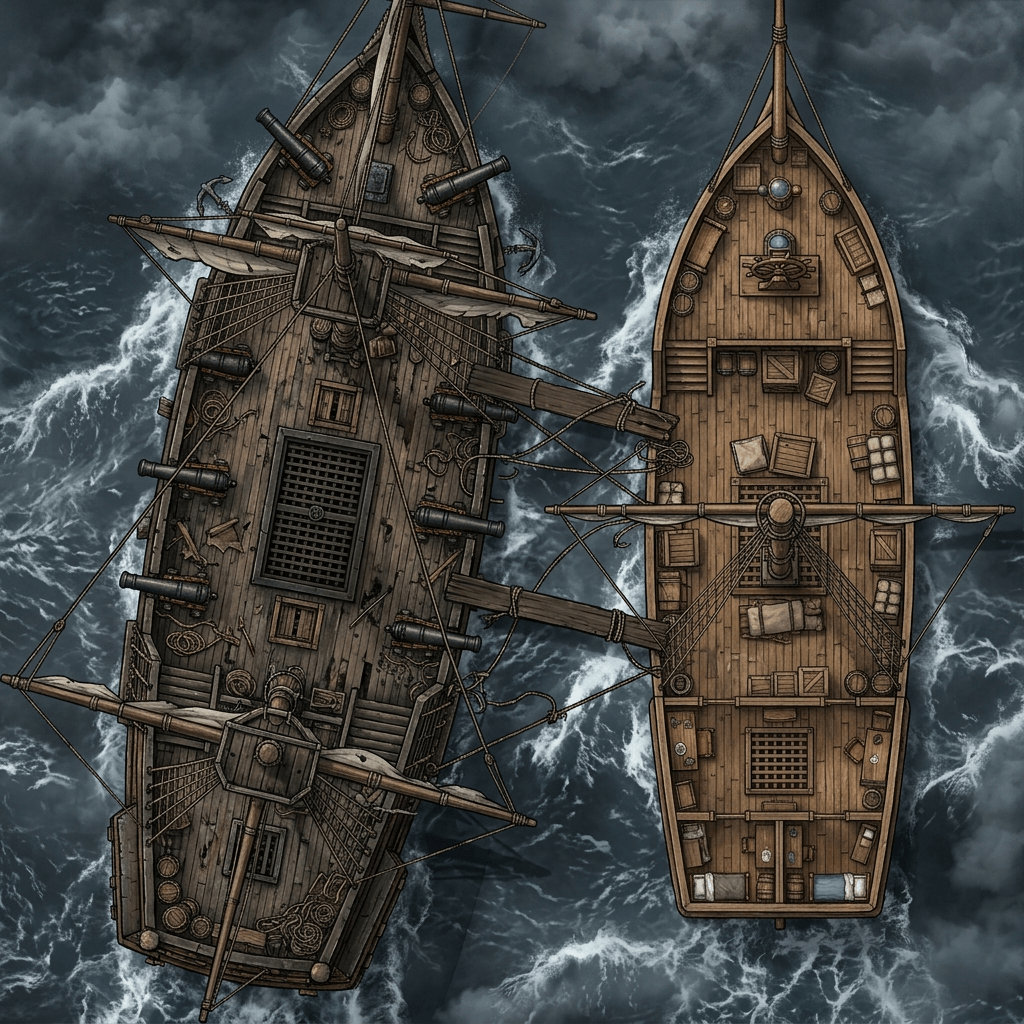
Whether your players are sailing the high seas in search of merchant ships to plunder or defending a royal fleet from bloodthirsty privateers, naval combat represents some of the most exciting moments in a tabletop campaign. However, running a successful sea encounter requires more than just narrative descriptions. GMs need a functional, tactical naval battle map to track ship positions, boarding actions, and environmental hazards. Traditional cartography editors require you to place every single plank and crate by hand, which can take hours. Fortunately, using modern AI tools, you can generate a detailed ship battle map and ocean battlegrounds instantly, allowing you to focus on the story.
In this guide, we will examine the core features of a great sea-based encounter. We will also outline the three layouts every GM needs and share five ready-to-use generator prompts to help you prep your next session in seconds.
What Makes a Great Naval Battle Map?
Running combat on the water is very different from running a traditional dungeon crawl. To keep combat engaging and dynamic, your map must incorporate several key features.
First, you need clear deck zones. A ship is not just a flat rectangle. It consists of multiple levels, including the raised forecastle at the front, the main deck in the middle, and the quarterdeck at the stern. Your naval battle map must clearly show these elevation changes, as they dictate line of sight and cover. GMs can use these zones to reward players who secure the high ground during a boarding action.
Second, the layout should feature climbable rigging and masts. Rope ladders, sails, and yardarms add a vertical dimension to combat. Agile characters like rogues and rangers will look for opportunities to climb the rigging to gain a tactical vantage point or drop down onto unsuspecting enemies, making these elements crucial visual indicators.
Third, you must include environmental hazards. Ocean combat is rarely peaceful. A great layout should depict rolling waves crashing against the hull, patches of fire spreading across the deck, or flying wooden splinters from cannon impacts. These features act as hazards that deal damage or restrict movement during the battle.
Finally, the map must handle ship-to-ship spacing. When running a boarding action, the distance between the two vessels is critical. The map must clearly show the gap between the hulls, the placement of wooden boarding planks, and the lines of grappling hooks, allowing players to plan their jumps across the open water.
The Three Naval Map Layouts You Need
To run a complete nautical campaign, you do not need hundreds of different files. Having these three core layouts will cover almost any sea encounter.
The first layout is the single ship deck. This represents your party's vessel or a target merchant ship. It is a detailed, top-down plan showing the main deck, hatches leading below deck, the steering wheel, and the cargo holds. GMs can use this for defensive encounters or basic shipboard roleplay.
The second layout is the boarding encounter. This shows two vessels locked side-by-side, connected by planks, ropes, and iron grapples. This is the classic layout for active boarding actions, where melee fighters clash in the center while spellcasters fire from the raised decks.
The second VTT asset you need is the open water hazard map. This represents the ocean itself, featuring reefs, whirlpools, sandbars, or even the tentacles of a giant sea monster. Ships are represented by smaller tokens on this larger grid, allowing you to run long-range cannon fights and maneuvering challenges. GMs looking for general ideas can read our guide on 10 AI battle map ideas to see how to integrate these hazards into their campaigns.
Five Naval Map Prompts
To help you get started, here are five ready-to-use prompts. These prompts are optimized to work beautifully with our ai battle map generator to produce high-quality tactical ship layouts.
1. Galleon Top Deck Under Storm
A massive warships sails through a raging tempest, its decks wet with rain as massive waves crash over the gunwales.
- The Prompt: "Top-down battle map of a large medieval galleon deck, dark wet wooden planks, ropes and sails, storm clouds, waves crashing against the hull, dramatic dark lighting, gridless digital art."
2. Pirate Cove Boarding
A pirate battle map showing two ships docked side-by-side inside a hidden cavern, illuminated by glowing sea moss and torches.
- The Setup: The party boards a pirate ship docked inside a secret cave. Planks connect the two decks.
- The Prompt: "Top-down battle map of a pirate galleon and a merchant ship side-by-side, wooden boarding planks, stone cavern walls, glowing green water, torchlight shadows, 90-degree overhead view."
3. Submerged Shipwreck Exploration
An ancient wreck sits on the sandy ocean floor, surrounded by coral reefs and school of colorful fish.
- The Setup: The characters dive to recover a chest from a sunken ship. Deep water acts as difficult terrain.
- The Prompt: "Top-down underwater battle map, sunken wooden ship ruins, colorful coral reefs, sandy ocean floor, sunbeams filtering through water, gridless fantasy art."
4. Lighthouse Rocky Cape Ambush
A narrow stone cape with a towering lighthouse, surrounded by jagged rocks and shallow water.
- The Setup: Smugglers ambush the party's rowboat as they approach the shore.
- The Prompt: "Top-down battle map of a rocky cape, stone lighthouse, breaking waves, shallow water, sandy paths, night lighting with a bright yellow beam of light, overhead perspective."
5. Burning Warship Endgame
A ship deck engulfed in flames, with smoke billowing from the hatches and broken planks creating hazardous barriers.
- The Setup: The party must escape from a sinking warship before the powder magazine explodes.
- The Prompt: "Top-down battle map of a burning ship deck, glowing orange embers, thick black smoke, broken masts, wooden debris, deep blue ocean water, gridless digital art."
Running Naval Combat Smoothly
Using a high-quality map makes tracking ship movement much easier. To keep combat flowing, we recommend tracking ship momentum and wind direction on the side of the board. Rather than calculating complex physics, use the map to establish clear movement vectors.
For example, a ship sailing with the wind might gain bonus movement, while turning against the wind requires a steering check. You can also designate specific damage zones on the map, such as the rudder or sails, allowing players to target critical parts of an enemy ship to slow them down.
To build these detailed environments instantly, use the Text to Tabletop app. The tool automatically enforces a flat top-down lock and strips out pre-baked grids, allowing you to generate a usable naval battle map in seconds. Sign up today at the Text to Tabletop app and start planning your next high-seas adventure!
Tyler V
Lead Developer and UX Designer at Text to Tabletop. Passionate about helping GMs and players create better TTRPG experiences.
Ready to Forge Your Next Battle Map?
Describe the encounter and get a grid-aligned, top-down battle map in seconds, then regenerate any area until it matches your vision.
Generate Your First Map Free3 free map tokens · no credit card required