AI Map Generators Compared: Text to Tabletop vs Inkarnate vs Dungeon Alchemist
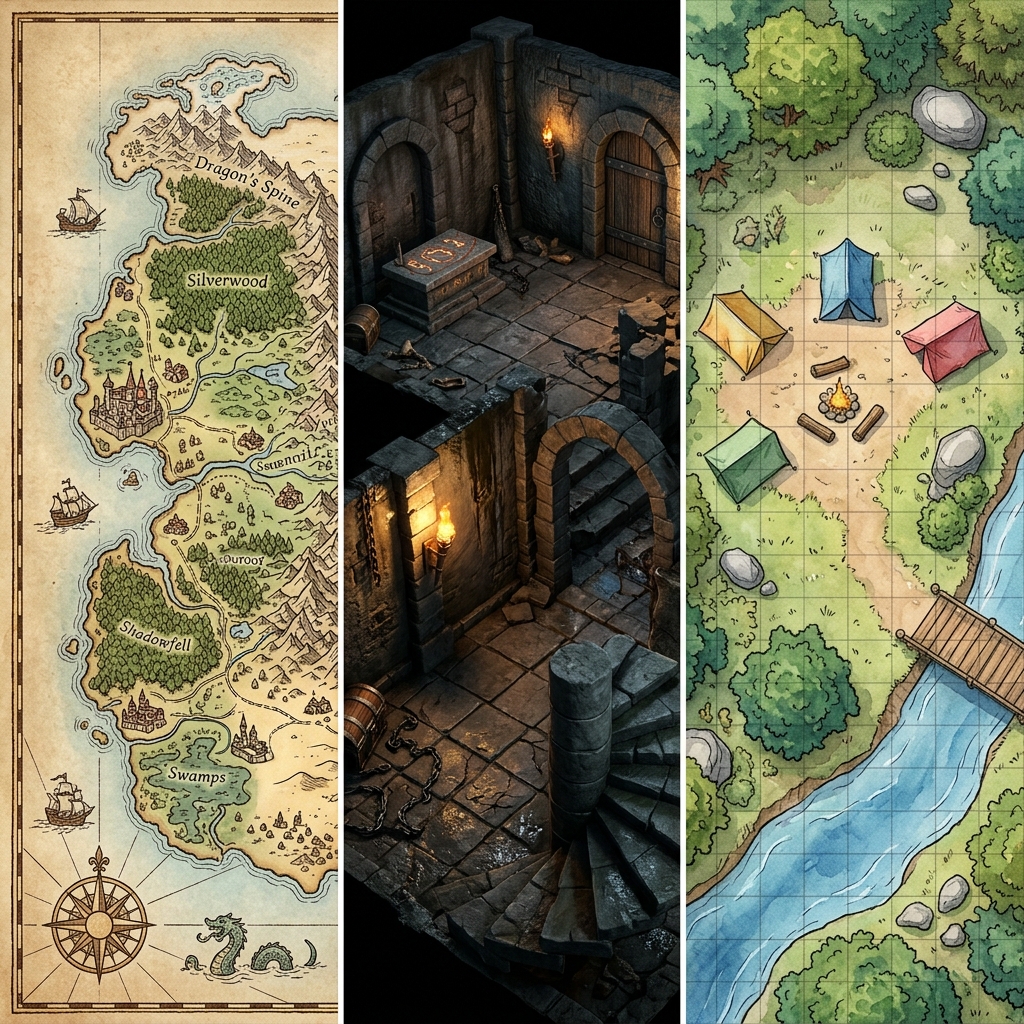
AI Map Generators Compared: Text to Tabletop vs Inkarnate vs Dungeon Alchemist
We are living in a golden age of tabletop RPG prep. Just a few years ago, Game Masters (GMs) had to rely on dry-erase mats or spend hours searching forums for a battle map that mostly fit their encounter. Today, map generation software can produce breathtaking, professional-quality maps in minutes.
But with so many premium tools on the market, evaluating which one is worth your time and money can be overwhelming.
In this guide, we are comparing three of the heaviest hitters in the TTRPG map space: Inkarnate, Dungeon Alchemist, and Text to Tabletop. Each tool tackles map-making from a fundamentally different architectural approach. We will break down their strengths, their weaknesses, and exactly which one you should buy based on your GMing style.
1. Inkarnate: The Asset-Placing Giant
Inkarnate is one of the most established and beloved tools in the TTRPG community. While it is a traditional web-based map maker rather than a pure AI-prompt engine, it remains the gold standard for granular control.
The Strengths
- Unmatched for World Maps: If you are building a continent, a world map, or a sprawling regional parchment map, Inkarnate is arguably the best tool on the market. Its blending brushes and isometric assets create beautiful fantasy cartography.
- Granular Control: You place every single barrel, chair, and tree manually. If you need a chest placed exactly 15 feet from the tavern door, Inkarnate lets you do it.
- Massive Asset Library: Their premium subscription provides thousands of highly detailed, hand-drawn 2D assets.
The Weaknesses
- The Time Sink: Because you are building everything by hand, crafting a detailed battle map takes hours.
- The Learning Curve: It operates similarly to Photoshop. Mastering the layer masking, shadow angles, and asset scaling takes real practice.
The Verdict: Buy Inkarnate if you are a world-builder who loves the relaxing, methodical process of hand-crafting regions and cities over several hours.
2. Dungeon Alchemist: The 3D Procedural Powerhouse
Dungeon Alchemist took Kickstarter by storm with a massive promise: you draw the outline of a room, and the software procedurally populates it with 3D furniture, lighting, and clutter.
The Strengths
- VTT Wall Integration: This is its killer feature. When you export a map to Virtual Tabletop software like Foundry or Fantasy Grounds, Dungeon Alchemist automatically imports the walls, doors, and light sources for line-of-sight calculation.
- Cinematic 3D: Because it is built on a 3D engine, you can lower the camera to a first-person perspective to show your players exactly what the room looks like from their characters' point of view.
- Dynamic Lighting: The environmental lighting and shadows are breathtakingly realistic.
The Weaknesses
- Hardware Requirements: This is a heavy, downloadable Steam application, not a web app. You need a dedicated gaming PC to run it smoothly; a standard laptop will struggle.
- Locked Art Style: The maps look undeniably like a 3D video game. If you prefer the look of hand-drawn crosshatch, watercolor, or classic 2D fantasy art, you cannot achieve it here.
- Grid Rigidity: The procedural generation heavily relies on right angles and blocky, grid-snapped architecture, making it difficult to generate natural, winding caves or organic forests.
The Verdict: Buy Dungeon Alchemist if you run your games strictly on a VTT, own a high-end PC, and value automatic wall-generation over artistic variety.
3. Text to Tabletop: The Instant AI Architect
Text to Tabletop is built specifically to bridge the gap between pure artistic flexibility and instant usability. It is a web-based, AI-native generator tuned strictly for overhead TTRPG battle maps.
The Strengths
- Absolute Speed: You type a prompt, and within seconds, you have a completely unique, highly detailed battle map. There is zero manual asset placement and zero learning curve.
- Infinite Art Styles: Because it leverages AI, you are not locked into one aesthetic. You can generate a gritty grimdark dungeon, a pastel faerie watercolor, or a retro 8-bit RPG tavern just by changing a single word in your prompt.
- Built for the Table: Generic AI art generators (like Midjourney) struggle with TTRPG maps; they tilt the camera, draw warped grids, and add random creatures. Text to Tabletop automatically locks the camera to a strict 90-degree overhead angle and natively strips out grids and NPCs, giving you a perfect, clean floorplan every time.
The Weaknesses
- Less Granular Control: You cannot manually click and drag a single chair three feet to the left. The AI composes the entire scene.
- No 3D Wall Exports: Unlike Dungeon Alchemist, it exports a flat 2D image. You will need to draw your own VTT walls and lighting barriers.
The Verdict: Buy Text to Tabletop if you are a busy GM who needs stunning, unique battle maps instantly. It is the ultimate tool for last-minute prep and infinite artistic variety.
Final Thoughts: Which One is Right for You?
Choosing the right map generator comes down to what you value most as a GM: Control, Integration, or Speed.
- If you have 5 hours to spare and want to place every single cobblestone by hand, get Inkarnate.
- If you have a powerful gaming rig and want automatic line-of-sight walls for your VTT, get Dungeon Alchemist.
- If your session starts in twenty minutes and you need a beautiful, highly specific, table-ready map generated instantly, get Text to Tabletop.
Ready to see how fast encounter prep can be? Try Text to Tabletop's Map Generator today and roll for initiative.
Tyler V
Lead Developer and UX Designer at Text to Tabletop. Passionate about helping GMs and players create better TTRPG experiences.
Ready to Forge Your Next Battle Map?
Describe the encounter and get a grid-aligned, top-down battle map in seconds, then regenerate any area until it matches your vision.
Generate Your First Map Free3 free map tokens · no credit card required